
Playing mobile games can be relaxing and feel like a safe place. Nevertheless, many people don’t know that they are also huge sources of data collection.
While some gathered information is used to genuinely improve the game (balancing difficulty, bug fixing), the biggest concern is when the collection exceeds what’s necessary. Our digital behaviour and personal data are a huge source of potential revenue.
Why Would a Mobile Game Collect Data?
Mobile games take the biggest share of the gaming market. Even if some games are “free”, developers still generate revenues through data collection and premium features.
When you download a game, you have to grant permissions, even if you sign in through social accounts. When you accept these terms and conditions, you are usually giving developers access to analytics and insight into who you are and how you behave.
What Kind of Data Is Valuable?
Not all information is worth the same, and not all games track the same data. However, here’s a simplified list of different types of analytics developers and marketers could be looking for:
Personal Information
Although basic, sometimes this information is not shared knowingly:
- Name or username
- Country or region
- Age or birth year
- Gender (if provided)
- Contact details
Some games even link your data across platforms. For example, log into a game on your smartphone, and it might already know your Instagram followers, your location history, and your search habits from last month.
Technical Details
You may never see this information collected in the background, but your device reveals a great deal about you. Mobile games frequently log:
- Device model and operating system.
- Language settings.
- Battery and storage status.
- IP address and approximate location.
- Unique device identifiers.
How You Behave
Every swipe, tap, and delay is a data point. For app developers, these indicators are signals that can measure:
- Playtime frequency.
- Most common in-game activities.
- In-game item purchases.
- If a user quickly responds to offers or bonuses.
Where You Are Located
Even games that don’t seem location-based may request access to GPS or Wi-Fi network details. Combined with IP tracking, this can reveal:
- Cities you visit.
- Daily movement patterns.
- Home and workplace proximity.
How Is Your Data Useful?
Targeted Advertising
Advertisers don’t just want generic clicks; they want players who are statistically likely to spend more money.
This is exactly why they need to know how a user behaves and what they want. Your habits, demographics, and device signals are helpful to categorize you into segments while continuing to create more data.
With around 90% of UK children playing games on digital devices, the data collection risks extend beyond adult users. According to the Internet Matters “Parenting Generation Game” survey, 1 in 2 parents worry about their child’s personal data being collected by online games. Some popular gaming apps collect over 15 data points on children.
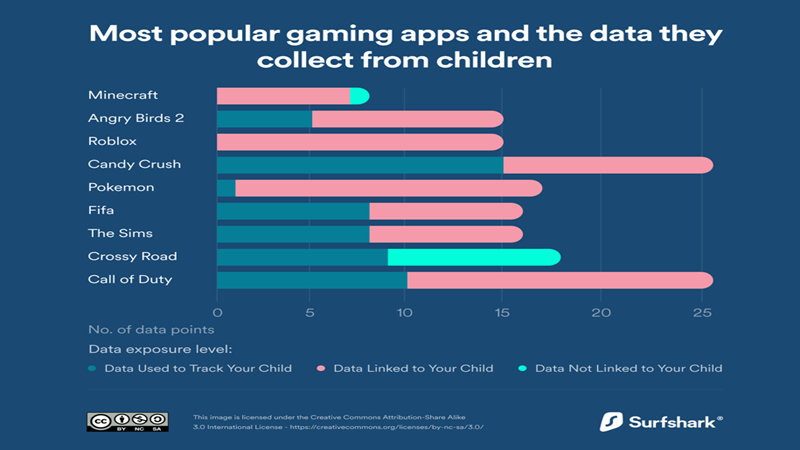
Most popular gaming apps and the data they collect from children
UK regulators have taken notice; the Information Commissioner’s Office recently announced it will examine closely how popular mobile games protect children’s privacy.
Market Research
It’s common for developers to test layouts and elements like reward timing on live players. This gives them reliable real-world data for experimentation. Players’ reactions help refine future games and revenue strategies.
Practical Ways You Can Protect Your Privacy
You don’t have to stop gaming to protect your privacy. Just implementing a few simple habits will be enough to limit what game developers can collect.
First, start with the basics and review your privacy settings and policy. Most mobile games include a dedicated section in the settings menu to opt out of personalized ads or data-tracking.
Secondly, strengthen your privacy by using tools that mask your connection. Consider using multiple tools at once, use privacy-focused browsers that block trackers by default and combine it with a multi-hop VPN so that it routes your traffic through multiple servers—it will be far harder for games to track your real location.
Lastly, if possible do not link your social media or personal email to create mobile game accounts. Use a dedicated address to prevent data linking between services to avoid targeted ads and breaches.
Conclusion
Mobile gaming is a huge industry that supports itself for a reason; it does much more than just provide pleasant experiences. They might collect information, but you’re not powerless and can take a few easy measures to protect your personal data. The first step is to stay aware and check your app permissions. Being conscious about what kind of information you want to share is the first line of defense.